A bright weekend in Corpus Christi can reveal every scuff, algae patch, and footpath on your deck. If you’re wondering how to pressure wash a deck without damaging wood, stain, or sealant, the safest approach is to clean with low pressure, use a wide-angle tip, let deck-safe detergents do most of the work, and rinse in smooth passes with the grain. Done right, you can lift grime while protecting the look and life of your boards.
Corpus Christi Power Washing helps homeowners across the Corpus Christi area keep outdoor spaces clean and ready for fun. This step-by-step guide explains the process so you can work carefully or know what to expect from a pro. It also notes when to call Deck Cleaning Services in Corpus Christi, TX for help, and how soft washing and pressure washing fit together on wood and composite.
Key Takeaways
- Start gentle: low PSI, a 25°–40° nozzle, and steady distance.
- Let cleaners do the heavy lifting; rinse with smooth, overlapping passes.
- Work with the grain and test in a hidden spot before you begin.
- After washing, brighten (if needed), dry fully, and sand light fuzz.
- Set a simple seasonal maintenance routine to prevent deep problems.
Table of Contents
- 1. Understand the basics and risks before you start
- 2. Inspect your deck: material, age, condition, and existing finish
- 3. Select the right tools, tips, and cleaners for the job
- 4. Prep the space for safety and results
- 5. Step-by-step washing technique that protects wood, stain, and sealant
- 6. Post-wash care: neutralize, dry, and plan finishing
- 7. Troubleshooting and long-term maintenance
- Frequently Asked Questions
- Key takeaways
- Conclusion
1. Understand the basics and risks before you start
Pressure washing uses pressurized water to lift dirt. Soft washing uses low pressure with cleaners to break down grime and growth. On wood and many composites, soft washing steps often come first so the washer can rinse at safer pressure. This two-part plan helps protect fibers and finishes.
PSI means pounds per square inch (force). GPM means gallons per minute (flow). More flow clears debris better at lower force. On wood, excessive force is the danger: high PSI can etch lines, raise grain, or blow out soft spring wood so that stripes remain visible through any stain. On composites, too much heat or force can mar the cap layer and leave wand marks.
Aim for the lowest PSI that still cleans, and increase only as needed. On sound wood, many pros start in a gentle range and adjust slowly. Use a wide-angle tip to spread energy and keep a steady standoff so the stream doesn’t drill a groove. Remember: your goal is to rinse loosened soil and cleaner, not to cut wood.
Work with the grain, not across it. Move in smooth, even passes and avoid tight circles that leave halos. Keep people and pets clear. Wear eye protection and hearing protection; pressure washer spray can injure skin. For general safety guidance, see Consumer Product Safety Commission resources (CPSC) and noise safety notes from NIOSH (NIOSH).
Pressure washing vs. soft washing: what each method does
Soft washing relies on cleaner dwell time with a gentle rinse and is excellent for mildew and algae. Pressure washing adds mechanical force to remove stubborn dirt after cleaners have done their work. Using both in sequence is safer for wood than relying on pressure alone.
Safe ranges for PSI, GPM, and nozzle angles on wood and composite
Use higher GPM when available to aid rinsing at lower PSI. Choose a 25° or 40° nozzle to spread impact. Keep the wand about 8–12 inches off the surface, adjusting only as testing allows. On composites, go wider and gentler, and avoid hot water unless the manufacturer approves it.
2. Inspect your deck: material, age, condition, and existing finish
Every deck is different. Older cedar is soft. Newer pressure-treated pine is denser but still has soft spring wood bands. Composite boards vary by brand and cap thickness. A short pre-check sets safe expectations and shows whether washing alone meets your goals or if sanding or a new finish should follow.
Look for labels under stairs or rails to identify wood species or a composite brand. If unknown, test in a low-visibility spot. Watch how fibers react. If grain lifts quickly, lower pressure and lean more on cleaners. If water beads, a strong sealer is still present; that may limit soil removal until the finish wears or is stripped.
Check fasteners. Loose screws can let boards chatter and splinter. Tighten what you can. Reset popped nails. Probe soft spots carefully; crumbling wood is rot and needs repair, not cleaning. Mark problem areas.
Scan the finish. A failing stain looks patchy, chalky, or flaking. Cleaners remove dirt, but they won’t reattach a failing coating. If re-staining is planned, cleaning plus brightening and some sanding may be needed. On composite, examine the cap layer—deep scratches, melted areas, or glossy swirls call for gentle care.
Identify wood species and composite types to set safe expectations
Cedar and redwood are soft, so keep your passes very gentle. Pressure-treated pine tolerates a bit more but still needs care. Dense hardwoods like ipe or merbau resist wear yet can burnish or streak. Capped composites need cool water and wide tips. Uncapped composites can hold stains deeper, so cleaner choice matters most.
Spot failing stain, sealant, rot, or fastener issues that affect cleaning
Peeling stain may need a chemical stripper before washing. Gray, oxidized wood benefits from a brightener after cleaning. Rot requires repair before any wash. Rusted fasteners can stain wood and may need a specific cleaner pass. Fix loose boards before spraying to keep work safe and results even.
3. Select the right tools, tips, and cleaners for the job
A reliable pressure washer with steady flow helps you clean at lower force. Gas units often provide higher GPM, while electric units are quieter and convenient for small decks. Either way, pair the machine with quality hoses and a trigger that lets you feather the stream. A longer wand helps maintain a steady angle and distance.
Nozzles matter. Color-coded tips indicate spray angle. Wider angles spread energy to protect wood. A 25° tip works for many tasks. A 40° tip is gentler and ideal for railings and aging boards. Avoid pin-point tips on wood. Rotary nozzles can be risky if you’re not experienced, as they concentrate force in a tight pattern.
Surface cleaners can speed up broad, flat areas by holding the spray at a fixed distance. Choose one rated for wood, and keep it moving. For tight spaces, a short lance or angled wand helps reach stair risers without blasting. A foam cannon can help you lay down cleaner evenly.
Cleaners do the heavy lifting. Use a deck-safe detergent for dirt and light soil. For mildew and algae, a cleaner with sodium hypochlorite or another biocide can help when used per label. For gray wood or after an alkaline cleaner, an oxalic or citric acid brightener can restore color and balance pH.
Always read labels. Don’t mix chemicals by guesswork. Keep runoff out of storm drains when possible; the EPA explains why managing urban runoff protects local water (EPA). Rinse plants before and after cleaner use to reduce the chance of browning.
Pressure washer setup, nozzles, surface cleaners, and accessories
Set up on stable, level ground. Use a supply hose with good flow. Bleed air from the line before starting. Keep spare O-rings and a tip-cleaning tool on hand. Wear eye, glove, and hearing protection; see NIOSH guidance on noise safety for longer sessions (NIOSH).
Detergents, mildew removers, and brighteners—when and how to use them
Apply detergent from bottom to top to avoid streaks. Allow the labeled dwell time. Keep surfaces wet; don’t let detergents dry. Rinse from top to bottom. Only apply brightener after the main rinse, then rinse again thoroughly. A neutral pH supports better stain adhesion later.
4. Prep the space for safety and results
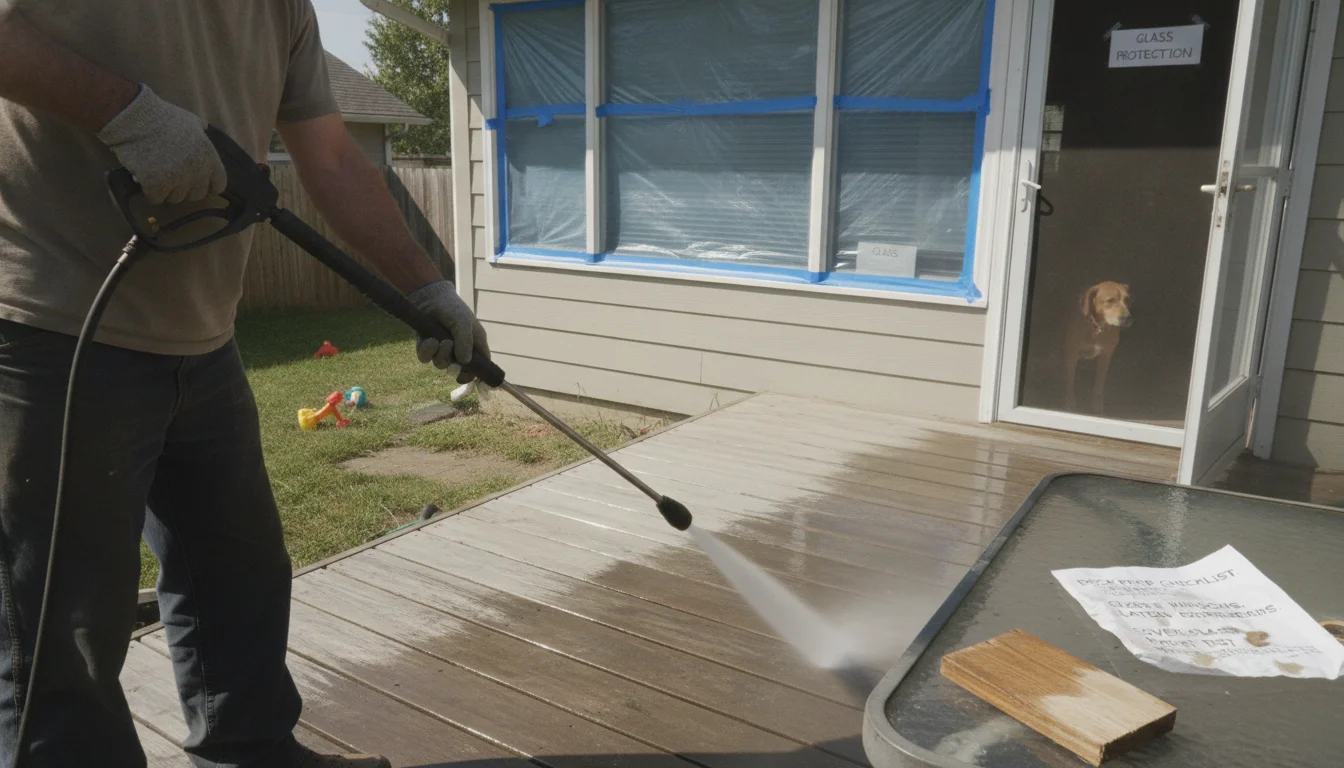
A bit of prep saves time and trouble. Clear furniture and planters. Cover outlets and fixtures. Move grills away from spray. Check that GFCI outlets can trip and reset. Tape plastic over door thresholds if the deck meets a doorway. Lay tarps or breathable covers to shield nearby plants. Pre-soak shrubs with clean water so they don’t pull in cleaners.
Sweep debris from gaps. Lift and remove large leaves. Collect toys and tools. Remove mats and hang them to dry later. Use a plastic scraper to loosen packed debris along board edges. Open gaps let rinse water and soil flow away.
Make a small test area. Start in a discreet corner or step. Set pressure low and choose a wide nozzle. Try a pass and watch the wood. If fibers stand up or lines appear, back off. If soil lifts cleanly, continue. Adjust in small increments.
Pre-wet the deck with clean water. This slows cleaner absorption for more even dwell and reduces spotting. Wet railings and posts too. Wet nearby siding and windows so any splash can be rinsed immediately.
Protect landscaping, furniture, outlets, and nearby surfaces
Cover delicate plants with breathable fabric if needed and avoid trapping heat under plastic in midday sun. Mask low glass to prevent hard-water dots. Close windows and latch doors. Keep pets indoors until rinsing is complete.
Patch test, set pressure, and pre-wet strategy to prevent spotting
A test shows the safe zone. Pre-wet evens absorbency. Keep cleaner moving and wet, then rinse in sections. This avoids lap lines where one area dried while another stayed wet.
5. Step-by-step washing technique that protects wood, stain, and sealant
These steps show how to pressure wash a deck while protecting wood, stain, and sealant.
Once the area is set, work in logical sections. Plan your exit so you don’t walk on wet, soapy boards. Keep a steady stance and hold the wand with two hands. Work with the grain so fibers lay flat. Feather strokes into dry areas so there’s no hard line.
- Apply deck cleaner evenly.
- Dwell per label while keeping the surface wet.
- Rinse with a wide-angle tip at low pressure.
- Wash boards with the grain using even, overlapping passes.
- Rinse rails, posts, and stairs from top to bottom.
- Final rinse of the whole deck and nearby surfaces.
Use a gentle overlap—about one-third of the spray width—to avoid missed strips and zebra lines. Keep the wand moving before you pull the trigger and after you let go to avoid start-stop marks. On stained decks you plan to keep as-is, rinse only and avoid aggressive passes that could strip the finish.
Manage runoff. Keep dirty water flowing away from flower beds. Lift mats to let water escape. Rinse any splash on siding right away. If you see suds pooling, pause and flush with clean water to thin it.
Maintain distance, angle, and feathering with the grain
Hold the tip roughly 8–12 inches above the wood. Angle the spray about 10–20 degrees off the surface. Feather into the dry zone at the end of each pass. Long, smooth strokes deliver an even look. Short chops leave marks.
Rinse patterns, overlap control, and runoff management
Rinse top-down on rails and posts. On deck boards, rinse with the grain in full board lengths when possible. Keep a steady one-third overlap. Watch where water flows and guide it toward safe drainage.
6. Post-wash care: neutralize, dry, and plan finishing
Alkaline cleaners can raise wood pH, which can interfere with stain bonding. A wood brightener with oxalic or citric acid helps bring pH back toward neutral, reduces tan and rust marks, and restores color. Apply brightener per label, keep it wet during dwell, then rinse thoroughly.
Let the deck dry fully. Sun and breeze help; shade and cool air slow the process. Don’t rush to stain or seal. Trapped moisture can lead to a cloudy finish or early wear. Many pros use a moisture meter to judge dryness before finishing. If you don’t have one, waiting longer is safer than finishing too soon.
Cleaning can raise wood grain. This is normal. Light sanding blends fuzz and helps stain lay smooth. Use a pole sander with fine grit. Vacuum or blow off dust and wipe rails with a soft cloth. Now the surface is ready for finish.
Choose the finish type that matches your goals and local sun exposure in Texas. A clear sealer shows wood tone but needs more frequent upkeep. A semi-transparent stain adds color and UV protection while showing grain. A solid-color stain hides more flaws but looks more like paint.
pH balancing and brightening for wood after alkaline cleaners
Brightener does two jobs: restores color and brings pH back in line. Apply with a pump sprayer after rinsing off the main cleaner. Keep it wet during dwell. Rinse thoroughly so residue won’t affect stain later.
Dry time, moisture testing, sanding, and timing for stain or sealer
Drying depends on sun, shade, and airflow. Allow extra time in cool or damp weather. Sand lightly to knock down raised fibers. Remove dust. Stain or seal in steady, mild weather for an even cure.
7. Troubleshooting and long-term maintenance
Even careful work can produce hiccups. You might see light and dark bands (tiger striping) or tiny wood hairs (fuzzing). The fix is to blend the area with gentle, even passes, allow it to dry, then sand lightly if fibers stand up.
Lap marks happen when one area dries while the next stays wet. Work smaller zones and keep edges damp as you go. On stained decks, lap lines in the coating require sanding and a new coat to even out color.
Etching appears as grooves or rough patches from excessive force. Stop, lower pressure, and widen the tip. Blend from the undamaged side using soft, even passes. Severe etching may require board replacement.
Plan a simple care cycle in Corpus Christi’s coastal climate. Sweep leaves often. Rinse spills promptly. Wash lightly each season to keep dirt from getting ground in. In shady or humid spots near the bay breeze, treat mildew early with a gentle cleaner before it roots deep. Consider Pool Deck Cleaning in Corpus Christi, TX if outdoor life centers near the water. Businesses with outdoor seating can use Commercial Pressure Washing in Corpus Christi, TX to keep walkways clean and welcoming.
Fixing lap marks, fuzzing, tiger striping, and etching
Blend stripes with gentle overlaps. Let the area dry and sand any fuzz. Lower PSI and widen the nozzle to avoid new marks. Replace boards if deep grooves remain.
Seasonal cleaning schedule and preventative tips to keep decks cleaner longer
Set a spring-and-fall rinse habit. Trim plants away from rails for airflow. Use mats at doors but lift and dry them often. Keep gutters clear so splashback doesn’t stain the first boards.
Frequently Asked Questions
Q1: What nozzle is safest for cleaning a wood deck?
A wide-angle tip, like 25° or 40°, is safest for wood. It spreads the water so force is lower. Start with the 40° on railings and older boards. Test in a small spot and adjust only if needed. If you’re learning how to pressure wash a deck, begin with the gentlest setup and increase only as required.
Q2: Can pressure washing remove old deck stain?
Light washing won’t strip a solid finish. It can lift loose stain but not remove intact coats. To remove old stain, use a stripper per label, then rinse and brighten. Sand or recoat after the wood dries.
Q3: How long should a deck dry before staining?
Dry time depends on sun, shade, and airflow. Allow extra time in cool or damp weather. Many pros use a moisture meter to check dryness. When in doubt, wait longer and sand lightly before coating for a smooth look.
Q4: Is soft washing better for composite decking?
Soft washing is often better for composite. Use low pressure with the right cleaner to break down grime. Then rinse with a wide-angle tip. Avoid hot water or narrow nozzles unless the maker allows them. Always test a small area first.
Q5: How do I choose a deck cleaning service near me?
Look for local deck cleaning teams with strong reviews, clear methods, and safe practices. Search for Deck Cleaning Services in Corpus Christi, TX and read recent feedback. Ask about deck-safe detergents, expected pressure ranges, test spots on inconspicuous areas, protection for plants and windows, and how they prevent etching and lap marks.
Key takeaways
- Start gentle: wide tip, low PSI, steady distance, and smooth passes.
- Cleaners first: let detergents do the work; rinse with care.
- Protect wood: work with the grain, pre-wet, and test a hidden spot.
- Finish right: brighten if needed, let it dry, and sand light fuzz.
- Maintain: simple seasonal rinses keep deep cleanings easier and safer.
Conclusion
A careful plan keeps decks safe and fresh. Corpus Christi Power Washing works across Corpus Christi every week, helping homes look their best with smart, gentle cleaning. When a space needs more help, rely on Deck Cleaning Services in Corpus Christi, TX or learn about About Our Pressure Washing Team in Corpus Christi, TX. For trusted help Corpus Christi Power Washing is ready. Contact us.
Corpus Christi Power Washing is proud to serve Corpus Christi and nearby neighborhoods across the main Corpus Christi area — from Downtown Corpus Christi and South Side to Portland, Robstown, Flour Bluff, Ingleside, and surrounding communities. Learn how a maintenance plan can keep patios, walkways, and fences looking clean year-round. If your home includes a pool area, ask about Pool Deck Cleaning in Corpus Christi, TX to keep that surface more comfortable under bare feet. For larger sites, see Commercial Pressure Washing in Corpus Christi, TX.
If you’re not sure what you’re seeing, it’s worth having someone look before it becomes a bigger repair. Corpus Christi Power Washing can assess the deck’s condition and recommend the safest path forward.
If you are not sure which of these you are dealing with, it is worth having someone look at it before it turns into a bigger job. Get in touch with Corpus Christi Power Washing today and we will tell you where you stand.